When someone says they need a team to “cover an event”, they may mean a highlight film, a photographer, a live stream or the entire production. Getting clear about the audience and the final result is the first useful step.
Think about the person in the room
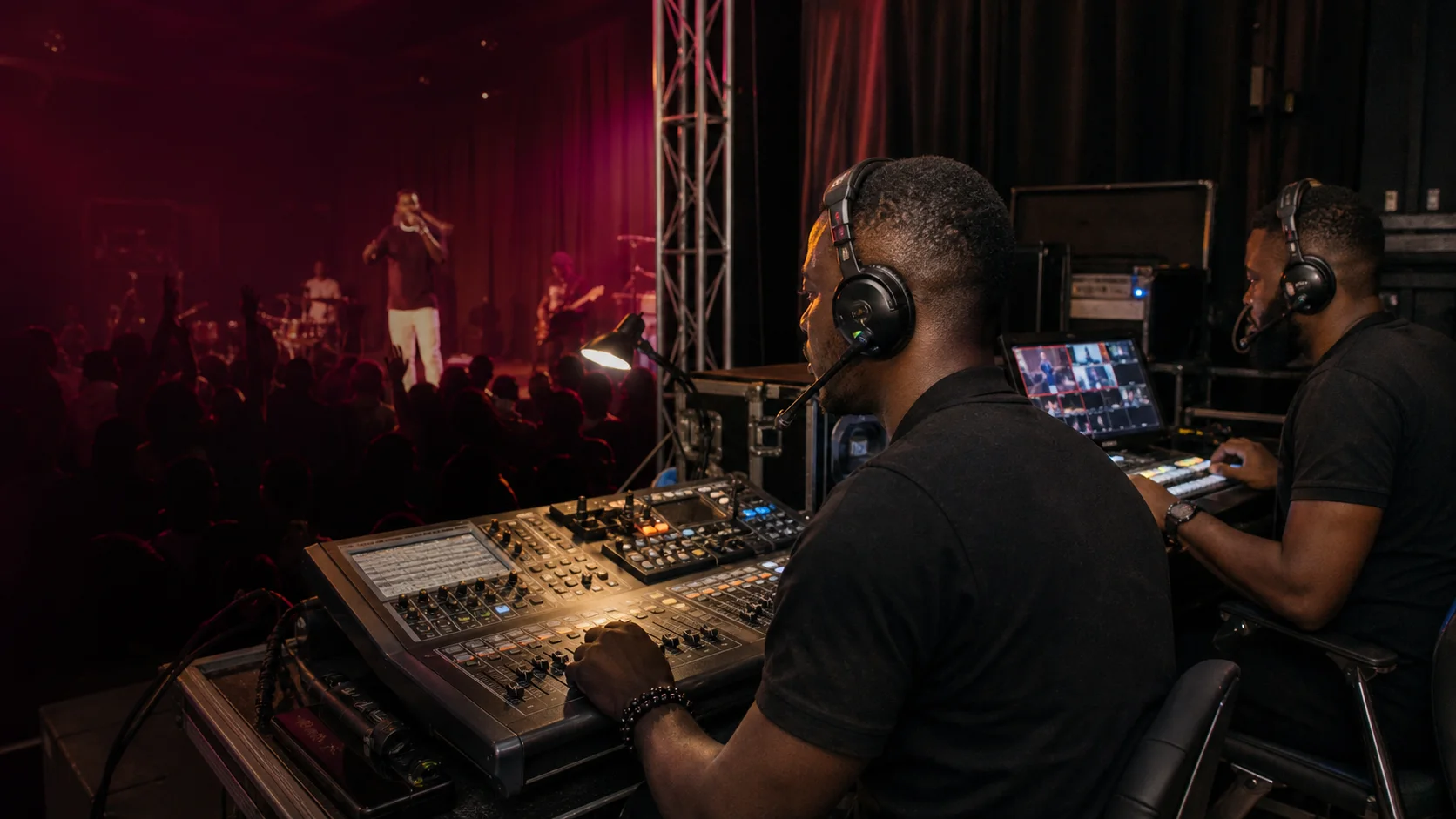
Live production is concerned with the event as it happens. The programme, transitions, presentation, audio and screens all contribute to the experience. A strong plan considers how these pieces work together, rather than treating them as separate last-minute requests.
Begin with the run of show: what happens, in what order, for how long and with whom. The programme gives the production team something concrete to plan around.
Then think about the person watching elsewhere
A stream has its own audience. People watching remotely need a view of the action, a clear programme feed and enough context to follow what is happening. The room’s experience does not automatically translate to a screen.
Discuss the stream destination, the venue connection and the material viewers need to see before the event. Allow time for technical checks and make responsibilities clear across the venue and production teams.
Plan the story that comes afterwards
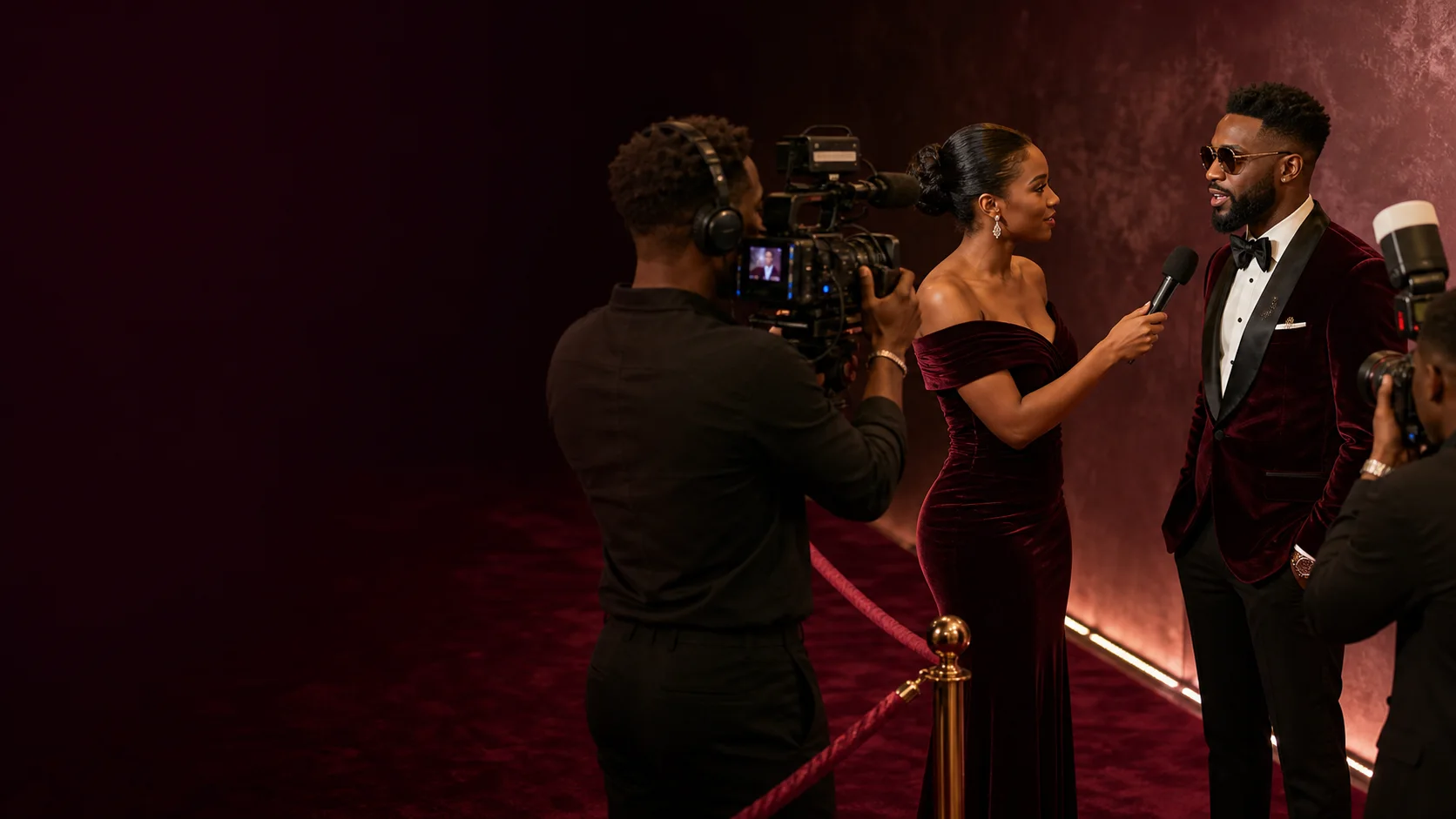
Event coverage focuses on the photographs and recorded video you want to take away. That might be a full presentation, a short highlight film, a gallery of guests or a collection of clips for social channels.
Tell the coverage team what is essential. A keynote speaker, a product reveal or a particular group of guests should not have to compete with an undefined request to capture “everything”. A short priority list is a much better brief.
Make the deliverables specific
A live stream, a recording of that stream and a separately edited event film are not automatically the same deliverable. Neither are selected photographs and all the raw camera files.
Agree on the outputs, format, review process and timing in advance. If content needs to go out while the event is still happening, that requires its own plan and resources.
- Who is the audience: in the room, online or both?
- What does the programme look like?
- Which moments and people are essential?
- What should be delivered after the event?
- Who approves the work and when is it needed?
Bring the teams into one conversation
Live production and coverage often work best together. A shared brief helps the team understand where cameras can be placed, what audio needs to be captured and when the key moments are expected.
You do not have to know every technical answer before making an enquiry. Start with the experience you want people to have, and the content you need when it is over.